Driving Conditions Around Streatham
The high street itself brings a different set of challenges, including frequent bus stops, pedestrian crossings, and a steady stream of traffic that requires consistent concentration and good hazard awareness. Learning to manage these conditions calmly is an important part of becoming a confident driver in this area, and instructors will usually introduce this kind of driving gradually rather than expecting learners to cope with it from the very first lesson.
Junctions and roundabouts around Streatham also require careful practice, particularly where multiple lanes or busy approach roads are involved. Learners need to judge gaps in traffic accurately, use mirrors and signals correctly, and maintain the right positioning throughout the manoeuvre. Instructors typically revisit the same junctions on several occasions so that learners develop a consistent, reliable technique rather than relying on a single successful attempt.
Parking is another regular feature of lessons in this area, given the mix of on-street parking near residential roads and the practical need to manoeuvre in tighter spaces close to the high street. Bay parking, parallel parking, and reversing exercises are usually practised in a range of locations so that learners are not simply memorising one specific spot, which helps ensure the skill genuinely transfers to unfamiliar situations later on.
As learners progress, lessons increasingly combine these elements into longer, more realistic routes that move between quiet streets, busier roads, and the kind of junctions found around Streatham. This reflects how driving actually works day to day, since real journeys rarely stay on one type of road throughout. Instructors familiar with the local area can plan these routes thoughtfully, introducing new challenges at a pace that suits the individual learner.
Most lessons begin with a short conversation about progress so far and what the current session will focus on, giving each lesson a clear purpose rather than being an unstructured drive. Instructors will usually explain a new skill before practising it, helping learners understand why a particular technique works rather than simply repeating an instruction without context.
What Happens in a Driving Lesson
Early lessons generally concentrate on the fundamentals, including cockpit checks, moving off and stopping under control, basic steering, and correct use of mirrors and signals. These form the basis for everything that follows, so instructors typically take the time needed to build genuine confidence here before introducing more complex driving situations, since gaps in the basics tend to resurface later if rushed.
As lessons progress, attention shifts towards junctions, roundabouts, and driving in heavier traffic, all of which are common around Streatham. Hazard awareness becomes increasingly important at this stage, with instructors encouraging learners to scan further ahead and anticipate the actions of other road users, including pedestrians and buses, rather than reacting only once a hazard is close by.
Feedback is given throughout each lesson and summarised briefly at the end, helping learners understand what is going well and where further practice is needed. Many find it useful to keep a simple note of specific points raised, particularly for manoeuvres or road types that need repeated practice before they feel comfortable.
In the later stages of a course, lessons increasingly involve independent driving, where the learner follows directions from a sat-nav or road signs with less direct input from the instructor. This mirrors part of the practical test and helps develop the kind of independent decision-making that is ultimately the goal of learning to drive, rather than simply following instructions step by step.
Learners in Streatham can choose between manual and automatic lessons, and the better option depends on personal circumstances rather than either being inherently superior. Manual lessons involve learning clutch control and gear changes alongside the core skills of steering, observation, and positioning. Automatic lessons remove the clutch pedal and manual gear changes entirely, which some learners find allows them to focus on road awareness sooner in the course.

Manual and Automatic Driving Lessons
Passing in a manual vehicle results in a licence that covers both manual and automatic cars, which is a key reason some learners choose this route even though it can take longer to master clutch control initially. An automatic licence, by comparison, only permits driving automatic vehicles, so this is worth considering carefully if there is any likelihood of needing to drive a manual car later, for example through work or a family vehicle.
Manual driving can feel physically demanding at first, since it involves coordinating the clutch, accelerator, and gear lever together, particularly in the stop-start conditions found on busier roads like Streatham High Road. Some learners adjust to this quickly, while others take longer and benefit from additional practice on hill starts and slower urban driving. Automatic vehicles remove this layer of coordination, which can help some learners build confidence with steering and awareness more quickly.
There is no universally correct choice between manual and automatic, and the right decision depends on future driving plans, personal preference, and how a learner responds to clutch control during early lessons. Some learners who start with manual tuition and find it difficult choose to switch to automatic partway through, while others persist and find it becomes manageable with continued practice. Discussing both options honestly with an instructor before starting can help avoid unnecessary frustration later in the course.
Preparing properly for the practical test involves more than simply completing a set number of lessons, since the test assesses vehicle control, road awareness, and the ability to drive safely without constant guidance. Instructors typically introduce test-standard routes and manoeuvres gradually, checking that a learner can perform each skill reliably and consistently rather than just once under ideal conditions.
The independent driving section of the test, where candidates follow sat-nav directions or road signs for part of the route, benefits from repeated practice on a variety of roads around the local area. This helps learners get comfortable making their own decisions with less prompting, which can feel noticeably different from earlier lessons that involve more frequent instructor input.
Getting Ready for Your Practical Driving Test
Manoeuvres such as parallel parking, bay parking, and pulling up safely on the right before reversing are also assessed as part of the test, and these are usually practised in several different locations so that learners are not simply relying on familiarity with one particular spot. Developing an accurate sense of distance and consistent mirror use takes repeated practice, and instructors will typically revisit these manoeuvres throughout the course.
A test-style mock lesson can be a useful way to highlight any remaining weak areas before the actual test date. This gives learners a sense of the format and pressure involved in a lower-stakes setting, allowing instructors to focus final lessons on whichever specific skills need the most attention, rather than continuing general practice without a clear direction.
Realistic expectations matter during this stage of preparation. Nerves are common even among well-prepared learners, and small mistakes do not automatically mean a test has been failed, since examiners are assessing overall safe driving rather than a flawless performance. Understanding this can help reduce unnecessary pressure in the days leading up to the test.
The cost of driving lessons is generally influenced by a combination of factors, including lesson length, whether tuition is manual or automatic, and whether a learner chooses standard weekly lessons or a more concentrated intensive course. Longer lessons, such as two-hour sessions, are often more time-efficient than shorter ones, since less time is spent on repeated warm-up material at the start of each session.
Standard lesson packages usually involve regular sessions spread across several weeks or months, which suits learners balancing lessons alongside work, study, or other commitments. This structure allows time between sessions for new skills to settle, and gives learners flexibility to progress at a pace that genuinely fits their schedule rather than a fixed, predetermined timeline.

Lesson Packages and What Affects Cost
Intensive courses condense a larger number of lessons into a shorter period, often across consecutive days or within a single week. This tends to suit learners working towards a specific deadline, such as an already-booked test date, or those who prefer to build skills through frequent, close repetition. Intensive courses are generally more demanding, so they often suit learners with some prior driving experience or a strong ability to absorb new information quickly.
Additional training needs can also affect the overall structure and cost of a lesson package. Some learners need extra sessions to build confidence with particular manoeuvres, motorway driving once qualified, or refresher training after a break from driving. Raising these needs early allows an instructor to plan a course that genuinely reflects individual requirements, rather than following a standard structure that may not suit everyone.
Deciding between a standard package and an intensive course ultimately comes down to available time, budget, personal learning style, and how soon a test is needed. Talking through these factors with an instructor before committing to a package can help ensure the chosen approach is realistic, rather than choosing based on assumptions about what should work rather than what actually fits.
Choosing the right driving instructor has a real impact on how quickly and confidently a learner progresses, since the working relationship between instructor and learner shapes the entire experience. In the UK, anyone charging for driving lessons must be registered with the DVSA as an Approved Driving Instructor, which involves passing exams covering driving ability, instructional technique, and road safety knowledge.
Teaching style differs between instructors, and what suits one learner will not necessarily suit another. Some learners prefer a highly structured approach with clear, step-by-step instructions, while others respond better to a more conversational style that allows questions and discussion throughout the lesson. An initial conversation, or even a first lesson, can help establish whether a particular instructor's approach feels like a good match.
Choosing a Driving Instructor in the Area
Patience is especially important for nervous learners or those returning to lessons after a difficult previous experience. An instructor able to adjust pace, explain concepts in different ways, and stay calm when mistakes happen tends to help learners build confidence more effectively than a rigid approach applied to every learner in the same way. This is worth raising directly with a prospective instructor where nervousness is a significant factor.
Familiarity with Streatham's roads, junctions, and common test routes is a genuine practical advantage, since an instructor who regularly teaches in the area can plan lessons around its specific challenges rather than relying on generic routes. This local knowledge tends to make more efficient use of lesson time, with less spent finding suitable roads and more spent on actual skill-building.
Ultimately, the right instructor communicates clearly, adapts to individual learning styles, and gives consistent, constructive feedback throughout the course. It is worth asking any prospective instructor about their qualifications, typical teaching approach, and availability before committing to a full course, since this upfront clarity generally leads to a smoother and more productive learning experience.
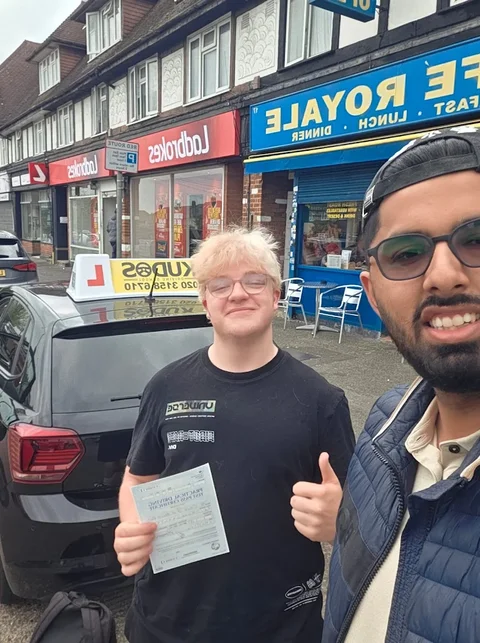
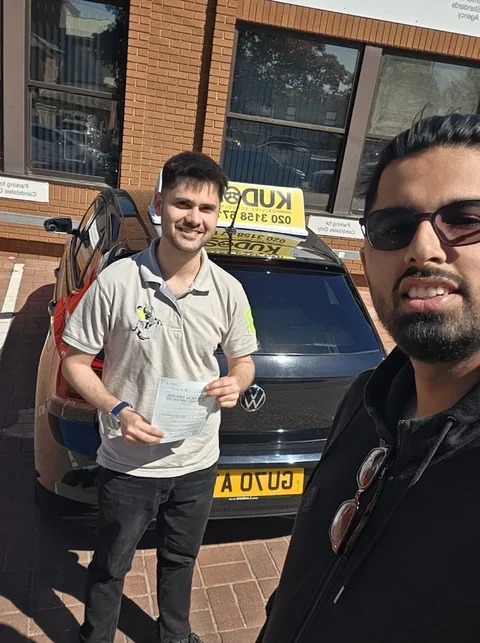
Kudos Driving School provides driving lessons in Wandsworth designed around each learner's starting point, whether that means learning to drive from scratch or building on experience gained elsewhere. Lessons progress through core driving skills at a pace suited to the individual, with time given to areas that need extra attention rather than following a fixed timetable regardless of ability. The aim throughout is steady, genuine progress towards safe, independent driving and, eventually, a practical test booked with confidence.
This type of tuition suits a broad range of learners. Complete beginners benefit from having every control and manoeuvre explained clearly from the first lesson, while learners with some prior experience, including those returning to lessons after a break, can move more quickly through familiar ground and focus on genuine gaps in their ability. Nervous learners often do better with a calmer, more patient pace, and learners preparing for a second or third test attempt usually need targeted work on specific weaknesses rather than a full repeat of earlier lessons.

.webp)